How Hydraulic Shock Absorbers Work
Piston movement and controlled fluid flow create damping during compression and rebound.
Movement Creates Fluid Flow
In a typical hydraulic shock absorber, relative suspension movement drives a piston through fluid. The fluid passes through designed passages and valves. The resulting resistance creates damping and converts part of the movement’s mechanical energy into heat.
Compression and Rebound
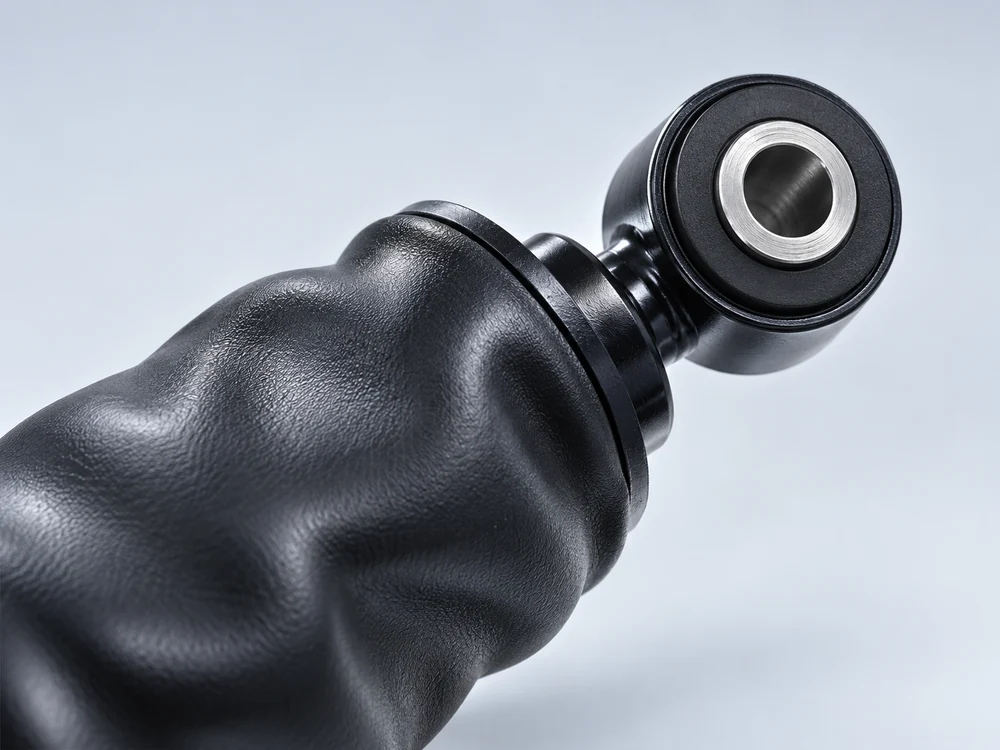
The suspension moves in both compression and extension, also called rebound. Fluid is directed through the relevant internal flow paths as the piston moves. The detailed arrangement varies with the damper construction and must not be inferred from the external product photograph alone.
Damping Characteristics
Valve design, fluid characteristics and internal construction influence the damping response. Some products offer adjustment, while others use a fixed specification. An adjustable feature must be confirmed for the exact model, together with its adjustment method and instructions.
From Principle to Product Selection
Understanding the operating principle does not establish compatibility. A replacement still needs the correct mounting dimensions, installation position and application specification. Send the existing reference and clear photographs when asking MOCI to check a product.
Explore Suspension Products
Browse real catalog references and confirm the vehicle and required configuration.
-

BEIBEN V3ET 8818900005 Front Cab Suspension
View Details →: BEIBEN V3ET 8818900005 Front Cab SuspensionBEIBEN V3ET front cab suspension reference 8818900005. Match the installation position, mounting dimensions…
-

BEIBEN V3ET 881890905 Rear Cab Suspension
View Details →: BEIBEN V3ET 881890905 Rear Cab SuspensionBEIBEN V3ET rear cab suspension reference 881890905. Match the installation position, mounting dimensions…
-

C&C TRUCKS 100500200012 Front Cab Suspension
View Details →: C&C TRUCKS 100500200012 Front Cab SuspensionC&C TRUCKS front cab suspension reference 100500200012. Match the installation position, mounting dimensions…
Get in touch
Need Help Matching a Part?
Send us your requirements and our team will get back to you shortly.